From that race I linked before, just an example:
This WILL NEVER be possible in real life, in any case…
In Zwift looks like it’s a matter of weight, the less, the faster…
Simply: NO WAY
Please Zwift people, ask somebody or everybody with some experience in real life conditions… 
That is only 50w different for a weight difference of 17.5kg.
How about you come up with some real life data to support your statement.
No problem, you ask us all time for proofs, hope you can trust someone of the few people that are taking the time and effort to come here and tell these things…
Well, as you probably remember, I posted this in other topic:

1 Like
Do you see the difference in power 150w more for the 80kg guy. Your zwift data was only 50w difference.
50 and 17?
Let’s make it more dramatic, choose 68W and 23kg of the other rider with same time/speed.
Where 150W? 

Pay some attention on data, it’s quite strange when you are a person asking for data proofs all time, for what? 
440-342= 98W average power, which is 22% less.
385-317= 68W average power, which is 17%less.
But, well, can’t believe you have nothing to say about!  @Gerrie_Delport : have you seen the terrain profile???
There are some climbs, didn’t see?
Remember +700m accumulated slope: https://cf.veloviewer.com/blog/Rio+Olympic+Mens+time+trial+2d.png
Even with that climbs where weight really matters, in real life, a heavier rider is more than 2km/h faster.
But no problem @Gerrie_Delport: 
…we all have no idea, you can continue to question or disbelieve what all the people with real life experience say: what happens in Zwift is not the same as in reality.
Maybe if you post data so people can read it it will be easier. Sorry I saw the red numbers.
Still compare 100w for a 27kg weight difference. Cancellara did 100w more that is 23% more than Geschke.
Now your zwift example:
83kg guy did only 47w more. That is only 13%. So if 83kg guy did 23% (415w) more he would have won.
I do question because I dont see any data that proof your point.
I haven’t kept up with the topic a whole lot, but I guess we just have to play it as the game it is. It won’t match life perfectly. I don’t like the algorithm and think it’s pretty junk versus real life, but it is what it is.
I have my CdA calculated from several rides and races right near .200 or a touch under using Chung method math and wind meter. I’m a nerd. Position is pretty much the HUUB wattbike pursuit setup.
That’s a dollar spend, sure, for skinsuit and disc wheel and such. But it’s also training time in that position and pain.
It’s a game, but you wonder how many folks ride their Z-TT’s in their 0.200 CdA positions.
That TT posted on Tempus Fugit above has folks making 400w and only going 22min in a 10mi race? Question mark as the linked zpower description says “10mi”. So perhaps something os off I don’t see. That’s only 27mph. 400w on a bad TT position is still a lot faster than that.
At the end of the day, the game can’t account for great setups versus junk setups.
Having done US TT stuff, I’d say a 0.200 CdA is in the lower 15% or so.
1 Like
Well, not easy to find proof enough clear for you, never.
I could post my data and people I know, but sure you will question the way we obtained…etc.
Now, I know you.
Always looking for the interpretation of the data that could support your statement of “Zwift is totally right and good simulation”.
That’s why I tried to find some public data from professional people that is official.
I could look if I can find more, not easy as this data (power, weight of riders…) is not public frequently.
But, for what?
We all can see the way you take and use numbers
If you have 4 riders, in the picture of Olympics, you choose what you can arrange to look better for your “fierce defence”.
Hope people can read and have their own oppinions.
I took the top row as I could not see all the numbers but if you post s link to the data I will do the same with the others.
It is not for me to prove Zwift is correct, I just wanted you to justify your statement.
There will always be outliers in data. But so far I have seen Zwift does a good job.
No real-time simulation will be perfect.
To model 4 riders to study the draft effect in 3D using ANSYS CFD software took over 40hours. Zwift need a model that can do it in a fraction of a second there for mathematical models are used like those describes in this thread.
Edit:
See the Zwift test in this post.
1 Like
4 posts were merged into an existing topic: Auto-Assign Race Categories
The best way to treat Zwift and IRL are that they are two different sports, although the former tries to be a simulation of the latter.
Sorry to necro this conversation - but as a rider on the extreme end of the scale (weight) - I’d say that CdA is definitely factored in. Rode tempus fugit on a TT last night, so no drafting effects or elevation change to speak of (though 1% still has a bit of an impact at my weight). Rider ahead of me beat me with less watts, and more w/kg. Rider below me lost out with less watts, but still higher w/kg - power and normalised power for all are very similar so likely steady state efforts all around, leaving cda as the deciding factor.
W/kg should not even be mentioned on a flat road like that.
I don’t think there is doubt that Zwift includes cda.
But you are correct heavy riders have to output more power on flat roads to overcome aerodynamic drag and rolling resistance.
I have posted the formula that I diagnosed a few times but there is no doubt that zwift uses both height and weight to determine CdA. Every 1cm of additional height costs about 1W at racing speed, and every 1kg about 2.5W, with about 0.5W of that being rolling resistance and the other 2W due to changes in air resistance. This is all assuming smooth flat road.
I no longer care about this whatsoever. I train only and dont race Z any longer. My virtual speed is totally irrelevant.
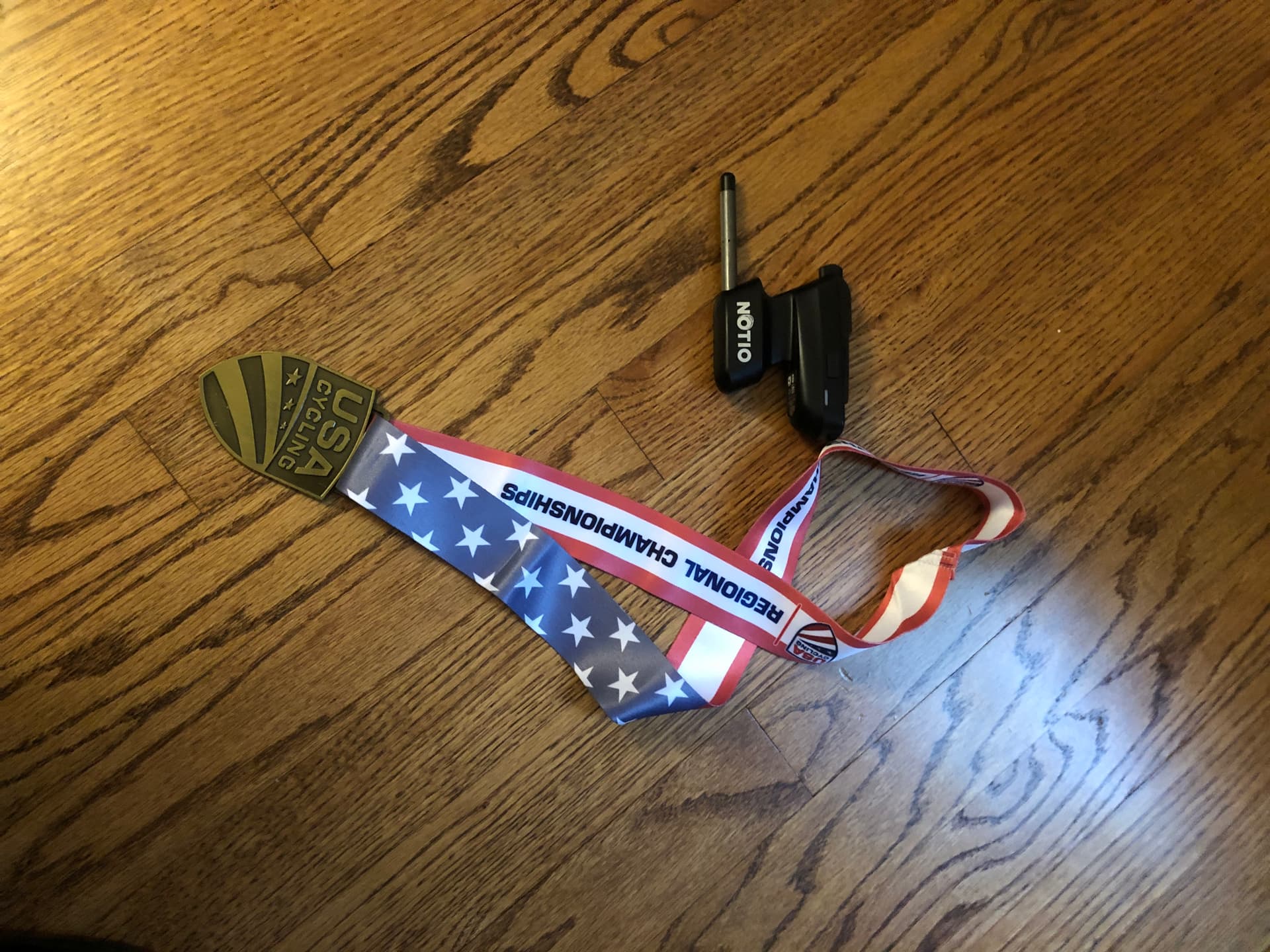
I won category at the regional USAC TT and even beat a few p/1/2 riders. That’s the real show. Hope to win overall in a couple years, working on more aero and more watts. A longshot for the p/1/2 cat but gotta try.
So cant care less about virtual aero in Z land. I logon and hit my workouts and logoff.
The podiums IRL don’t really look like Z world, that’s all I can say about odd Z world speeds for folks versus real life TT racers. The rider powers, positions, sizes, just seems different. That ain’t gospel, just what it looks like from my point of view.
But have fun. Dont worry about it. Use it to drive real world fitness and results.
3 Likes

 ) then Zwift is even more “penalizer”, maybe assuming that a 75kg rider are always very far from 0,20, maybe 0,28?